but I just rode on by...
Thursday, September 1
First Aid
On my way to work today as I was riding the scoot down the hill by the car wash I noticed some cars pulled off to the side of the road next to a bike. As I got closer I noticed why they had stopped, a girl was sitting with her back against the barrier, blood dripping down her face with her bike mangled a few feet by her side. The cars had stopped to offer assistance to her, a man on a phone, a woman running out of a car to offer help. And I remember exactly how it felt for that girl to be in that situation and it made me feel so helpless. I wish I knew first aid better and how to offer help in those situations

Know Your Rights
Print out cool little reminder cards here
contents of cards are as follows:
You Just Got ArrestedIn the event you are taken into police custody, the U.S. constitution provides you with the right to remain silent, be informed of any charges against you (and their penalties), speak to your attorney (or have one appointed if you can't afford one), and have a judge decide whether or not you should be let out of jail until your trial.
The police are allowed to ask you processing questions like your name and address. You are required to comply with their requests for this type of information regardless of your right to remain silent. You do not have to answer personal questions, questions pertaining to the crime for which you are charged, or answer anything without an attorney present.
Your silence cannot be used against you, but what you say or write can. If you want to answer their questions with a legal counsel, be sure you tell them immediately. The police are not allowed to question you without a lawyer, once requested, unless you later waive that right.
You Just Got Pulled OverIn the event you are pulled over for a moving violation or citation, according to the "Plain View Doctrine" you have the right to refuse a search of your vehicle if the officer does not have a warrant. If the officer can see contraband in plain sight, however, a warrant to search that visible area is not necessary. You also will need to submit to a basic body pat-down should the officer have strong reason to believe you are armed.
You also have the right to refuse to take a breathalyzer test. While there are no legal repercussions, refusal reflects poorly on you when your case is heard and can have administrative penalties such as a harsher fine or lengthier suspension of your license.
via LifeHacker.com
Talent Is Nothing Without Focus and Endurance
In every interview I'm asked what's the most important quality a novelist has to have. It's pretty obvious: talent. Now matter how much enthusiasm and effort you put into writing, if you totally lack literary talent you can forget about being a novelist. This is more of a prerequisite than a necessary quality. If you don't have any fuel, even the best car won't run.
The problem with talent, though, is that in most cases the person involved can't control its amount or quality. You might find the amount isn't enough and you want to increase it, or you might try to be frugal and make it last longer, but in neither case do things work out that easily. Talent has a mind of its own and wells up when it wants to, and once it dries up, that's it. Of course, certain poets and rock singers whose genius went out in a blaze of glory-people like Schubert and Mozart, whose dramatic early deaths turned them into legends-have a certain appeal, but for the vast majority of us this isn't the model we follow.
quotes come from writer Haruki Murakami
Economic Divisions and Political Polarization in Red and Blue America
polarization is strongest among political activists (duh!), and that much of the observed partisan disagreement reflects a deep divide not so much among voters as between Democratic and Republican politicians .On individual issues or clusters of issues, Americans are not much more polarized now than 30 years ago. But issue attitudes are much more closely tied to party identification and self-declared liberal–conservative ideology. As a nation, we have become much more polarized in our views of the major political parties, without there being much of a move to the extremes on the issues themselves. Voters—especially those with higher levels of education and political involvement—have sorted themselves into parties based on political ideology.
Wednesday, August 31
Tuesday, August 30
Firefighting in Ancient Rome
In Rome, "the fire department" was a group of slaves, carrying around these advanced (for the time) pumps. These slaves were called the Familia Publica. Since Roman fires could be very violent and widespread, the slaves were usually slow to respond- thereby guaranteeing their own safety. As a result, there was a lack of firefighting going on. Some clever and cruel businessmen, such as Crassus, made fortunes in the firefighting "business". Crassus had his own team of slaves that worked as firefighters. He and the slaves would go to the burning house, and as it burned, Crassus would attempt to buy it. As the building burned more and more, Crassus would offer less and less money. As soon as the owner relented to sell to Crassus, the slaves would put out the fire.
In the year 6 A.D., almost 30 percent of Rome burned in a very large series of fires. The Emperor Augustus decided that this was much too high a cost, so he assembled a team of public firefighters, named the Vigiles. It was comprised of seven thousand freed slaves who would win citizenship after six years' service in the Vigiles. After a century, freedmen would enter the service of the Vigiles merely for the prestige that came with service. It was ranked much like an elite military service. The Vigiles had become so powerful that they could break into a house if they had suspicion there was a fire inside. If a householder was found to be negligent by allowing a fire to start, the commander could have him flogged.
The Vigiles were successful in fighting fires for over four hundred years; the only severe fire in Rome during this time was in 64 A.D. (There are theories that say the Emperor Nero may have forced them not to act, so he could clear room for his new palace.) Despite their success in Rome, the Vigiles concept did not spread to other cities in the Empire. This was probably due to political factors at the time.
Monday, August 29
Our Life History
The history of our lives are more than a collection brief genealogical trees, our lives are interconnected with the world around us. Deep patterns and connections confound our understanding, but the message is clear. Our progenitors were survivors. Survivors who depended on each other and still faced the challenges of the world big and small.
We are Life, just one of many forms
read it and weep: school schedule
here is my current schedule:
Monday, Wednesday, Friday
Microbiology 11:00 am - 11:50 am
Genetics 12:00 pm - 12:50 pm
Math 1:30 pm - 2:55 pm
Monday
Microbiology lab 3:00 pm - 4:50 pm M
Monday, Wednesday, Friday
Microbiology 11:00 am - 11:50 am
Genetics 12:00 pm - 12:50 pm
Math 1:30 pm - 2:55 pm
Monday
Microbiology lab 3:00 pm - 4:50 pm M
Friday
Genetics lab 10:00 am - 10:50 am F
Genetics lab 10:00 am - 10:50 am F
Sunday, August 28
Soldering skills acquired!


But I was able to solder the free maker robot pin. It is super rad!
Saturday, August 27
Standing on a Cube-shaped planet
ever wonder what it would be like to stand on a cube shaped planet?
The Straight Dope Answers:
The Straight Dope Answers:
The first thing you notice on being teleported to cubical earth is that you’re at the edge of a vast body of water we’ll call the Central Ocean. The land rises steeply away from the shore — apparently the ocean lies in a basin. This strikes you as odd, since you’d think the sides of a cubical planet would be flat. Patience. All will soon become clear.
Turning from the ocean and looking out over the land, you discover something else — you can see vast distances. On spherical earth the horizon on average is a little over three miles away. On cubical earth you can, in theory, see to the edge of the planet, potentially a distance of thousands of miles. Up the slope you’re standing on, impossibly far off, you can make out a gigantic mountain peak — one of the corners, you realize, of your cubical world.
Time to get hiking. I hope you’re in good shape, since the path literally becomes steeper with every step — you’ll have the impression of climbing up the inside of a round bowl. Worse, the mountain is stupefyingly high. How high? Well, the tallest known mountain in the solar system is Olympus Mons on Mars, 14 miles high from base to peak. In contrast, the vertical rise from low point to high point on cubical earth is about 2,300 miles.
Soon you see why you need a spacesuit — the atmosphere gets progressively thinner until there’s none at all and you’re in the blackness of space. One consolation is that your weight steadily decreases. If you weigh 200 pounds at sea level back on spherical earth, you’ll discover when you finally reach the peak that you weigh just 103.
But here you are, on top at last. You don’t have the sense of walking around 90-degree corners. The peak looks like the tip of a three-sided pyramid. The three sides fall away steeply — if you lose your footing you’ll have a wicked drop.
On the plus side, the view is like none on earth, or on any planet anywhere. You can sight down one edge of the cube to a far corner, a distance of some 6,400 miles. Even more strikingly, you see all the atmosphere and water has been concentrated by gravity into a blob in the middle of each face, with the corners and edges poking out into space. You realize your cubical planet isn’t one world but six, each face’s segment of the biosphere isolated from the others by the hopeless climb.
Bizarre? Yup. Impossible, too. You may want your planet to be cubical. Just about every other force in the universe wants it round.

Friday, August 26
The Illusion of Asymmetric Insight
The Misconception: You celebrate diversity and respect others’ points of view.
The Truth: You are driven to create and form groups and then believe others are wrong just because they are others.
The Truth: You are driven to create and form groups and then believe others are wrong just because they are others.
The illusion of asymmetric insight—creates a lot of problems. For instance, it allows you to completely reject what others believe because you think you understand it, and remain convinced that they'd agree with you if only they understood your point of view. Basically, you think you can understand everyone else and nobody can understand you. It gets even worse in groups. If you need an example, take a look at politics.
In reality, nobody's really right or wrong. We're never going to be able to paint a full picture of ourselves even if we're completely honest. Because much of who we are is internalized, we'll always project an incomplete version of who we are. When we look at other people, however, we have to remember that they're doing the same thing. It's easy to argue and disagree with what we see, hear, and observe, but the full truth is often often beyond our reach. Next time you disagree with another person or group, remember that you probably don't truly know and understand their point of view. You may agree on more than you're able to perceive.
Who you are alone is not who you are with a lover or a friend. You quick-change like Superman in a phone booth when you bump into old friends from high school at the grocery store, or the ex in line for the movie. When you part, you quick-change back and tell the person you are with why you appeared so strange for a moment. They understand, after all, they are also in disguise. It’s not a new or novel concept, the idea of multiple identities for multiple occasions, but it’s also not something you talk about often. The idea is old enough that the word person derives from persona – a Latin word for the masks Greek actors sometimes wore so people in the back rows of a performance could see who was on stage.
researchers asked people to describe a time when they feel most like themselves. Most subjects, 78 percent, described something internal and unobservable like the feeling of seeing their child excel or the rush of applause after playing for an audience. When asked to describe when they believed friends or relatives were most illustrative of their personalities, they described internal feelings only 28 percent of the time. Instead, they tended to describe actions. Tom is most like Tom when he is telling a dirty joke. Jill is most like Jill when she is rock climbing. You can’t see internal states of others, so you generally don’t use those states to describe their personalities.
The illusion of asymmetric insight makes it seem as though you know everyone else far better than they know you, and not only that, but you know them better than they know themselves. You believe the same thing about groups of which you are a member. As a whole, your group understands outsiders better than outsiders understand your group, and you understand the group better than its members know the group to which they belong.
The researchers explained this is how one eventually arrives at the illusion of naive realism, or believing your thoughts and perceptions are true, accurate and correct, therefore if someone sees things differently than you or disagrees with you in some way it is the result of a bias or an influence or a shortcoming. You feel like the other person must have been tainted in some way, otherwise they would see the world the way you do – the right way. The illusion of asymmetrical insight clouds your ability to see the people you disagree with as nuanced and complex. You tend to see your self and the groups you belong to in shades of gray, but others and their groups as solid and defined primary colors lacking nuance or complexity.
This and many other studies show you believe you see more of other people’s icebergs (personality) than they see of yours; meanwhile, they think the same thing about you.excerpts collected from links posted above. First link is more in depth and longer, while the second one is much shorter and gives a brief overview
Thursday, August 25
New York - Empire of Evolution - NYTimes.com
New York - Empire of Evolution - NYTimes.com: "To study evolution, Jason Munshi-South has tracked elephants in central Africa and proboscis monkeys in the wilds of Borneo. But for his most recent expedition, he took the A train."
Wednesday, August 24

Tuesday, August 23
Why Are Finland's Schools Successful?
Great write up on why the education system in Finland has been so effective (<-- points to scores from 2007)
here are some excerpts from the article that I found interesting.
here are some excerpts from the article that I found interesting.
“Whatever it takes” is an attitude that drives not just Kirkkojarvi’s 30 teachers, but most of Finland’s 62,000 educators in 3,500 schools from Lapland to Turku—professionals selected from the top 10 percent of the nation’s graduates to earn a required master’s degree in education. Many schools are small enough so that teachers know every student. If one method fails, teachers consult with colleagues to try something else. They seem to relish the challenges. Nearly 30 percent of Finland’s children receive some kind of special help during their first nine years of school. The school where Louhivuori teaches served 240 first through ninth graders last year; and in contrast with Finland’s reputation for ethnic homogeneity, more than half of its 150 elementary-level students are immigrants—from Somalia, Iraq, Russia, Bangladesh, Estonia and Ethiopia, among other nations. “Children from wealthy families with lots of education can be taught by stupid teachers,” Louhivuori said, smiling. “We try to catch the weak students. It’s deep in our thinking.”
Ninety-three percent of Finns graduate from academic or vocational high schools, 17.5 percentage points higher than the United States, and 66 percent go on to higher education, the highest rate in the European Union. Yet Finland spends about 30 percent less per student than the United States.
Teachers in Finland spend fewer hours at school each day and spend less time in classrooms than American teachers. Teachers use the extra time to build curriculums and assess their students. Children spend far more time playing outside, even in the depths of winter. Homework is minimal. Compulsory schooling does not begin until age 7. “We have no hurry,” said Louhivuori. “Children learn better when they are ready. Why stress them out?”
in 1979, when reformers required that every teacher earn a fifth-year master’s degree in theory and practice at one of eight state universities—at state expense. From then on, teachers were effectively granted equal status with doctors and lawyers. Applicants began flooding teaching programs, not because the salaries were so high but because autonomy and respect made the job attractive
Is Justice Found in Absolutes?
Is Justice found in absolutes? To answer this question I am reminded of a particular Star Trek TNG episode that I recently watched.
For some background the episode (aptly named "Justice") deals with a mission in which the Enterprise is to investigate a newly discovered planet. On first arriving the Enterprise finds the planet populated with people living in an Eden like idylic state, much akin to a utopia. On further investigation by an away team sent to the surface we learn the underpinnings of the utopian society, that there is interestingly only one law that the people of the planet live by with the punishment of a swift and merciless death upon breaking it. Sounds simple enough right?
Back on the Enterprise the plot thickens with the discovery of a cloaked and powerful space station that orbits the planet which has provided and taken care of the planets inhabitants. However unbeknownst to the inhabitants of the planet who attribute their peaceful and tranquil existence to a "god" of sorts is actually the orbiting space station providing for the people of the planet in a god-like fashion.
The crisis of the episode is made clear when Wesley Crusher (a younger member of the crew) has innocently broken the one rule of the planet and is sentenced to death. Upon hearing this news Captain Picard intervenes to try and resolve the situation the the following ensues: (warning for those who are not familiar with Star Trek: low production values and cheesy outfits follow, but try and see beyond that and you will see the social commentary)
Here is where we see that justice does not exist in terms of absolutes, that justice must act not alone but with mercy and compassion. Without mercy justice is nothing and there are always exception to the rule that if justice were absolute would not allow.
For some background the episode (aptly named "Justice") deals with a mission in which the Enterprise is to investigate a newly discovered planet. On first arriving the Enterprise finds the planet populated with people living in an Eden like idylic state, much akin to a utopia. On further investigation by an away team sent to the surface we learn the underpinnings of the utopian society, that there is interestingly only one law that the people of the planet live by with the punishment of a swift and merciless death upon breaking it. Sounds simple enough right?
Back on the Enterprise the plot thickens with the discovery of a cloaked and powerful space station that orbits the planet which has provided and taken care of the planets inhabitants. However unbeknownst to the inhabitants of the planet who attribute their peaceful and tranquil existence to a "god" of sorts is actually the orbiting space station providing for the people of the planet in a god-like fashion.
The crisis of the episode is made clear when Wesley Crusher (a younger member of the crew) has innocently broken the one rule of the planet and is sentenced to death. Upon hearing this news Captain Picard intervenes to try and resolve the situation the the following ensues: (warning for those who are not familiar with Star Trek: low production values and cheesy outfits follow, but try and see beyond that and you will see the social commentary)
Monday, August 22

Environmentalism is Conservatism
From Scientific American:
the GOP actually started environmental protection in the first place. Richard Nixon signed into law most of the nation's landmark environmental laws and founded the Environmental Protection Agency back in 1970.where have all the conservatives in the republican party gone?
A bit further back, Teddy Roosevelt founded the national park system, among other efforts to conserve the natural heritage of the United States.
"While I am a great believer in the free enterprise system and all that it entails, I am an even stronger believer in the right of our people to live in a clean, pollution free environment"
-Barry Goldwater
Why I am not a Libertarian
Why I am not a Libertarian from the Weekly Sift
Of all the political movements out there, the Libertarians have the coolest rhetoric. No matter what the issue is, they get to talk about Freedom vs. Tyranny and quote all that rousing stuff the Founders said about King George.
It’s also the perfect belief system for a young male (and maybe, by now, young females too). You don’t need knowledge or experience of any specific situations, you just need to understand the One Big Idea That Solves Everything: Other than a small and appropriately humbled military and judicial establishment, government is bad. Protect life, protect property, enforce contracts — and leave everything else to the market.
Bike Riding
getting the motivation to ride my bike can be difficult sometimes, especially when the weather gets cold, or wet. But what gets me going is the fact that I know that I will not regret getting out and riding when I do. You can almost never regret getting out and riding your bike.
Sunday, August 21
Worry Wort
Toady has brought a bit of worry because of a few things. They may seem trivial and not important, but to me they have a way of becoming the only things I think about.
- I start school next week and I am stressing out about my math class. I am just worried that the class will be beyond my capacity and really stretch me. I suppose that it is good to be stretched just a bit but I don't want to do poorly in this class, I want to succeed and gain the necessary math skills that I will need. As I have mentioned before I have the option to take a 990 level online class or a level 1000 math class which unbeknownst to me is a merging of the 990 level course and a 1010 course. I am leaning towards taking the 1000 level class because lets say in the case that I do poorly in the class I would have to retake it in the spring semester which is what I would have to do anyways if I was taking a 990 level course. On top of taking a fast paced math course I am taking two upper division science classes (Microbiology and Genetics) which will also be a large time commitment to stay current with all the material.
- my friends are moving to Salt Lake City and I dont want to lose contact with them. I know I will see them, its just that I wont see them as much as if I were living with them.
- Last night I attempted to order an HP Touchpad from Hp's website, and due to the huge and overwhelming demand HP has gotten over the past day of so for their dramatically reduced tablet price their servers have been completely swamped. I attempted to place an order and I received an order validation on their site but as of yet have not received a confirmation email for my order. I am not so much worried about getting a tablet or not as I am about getting charged without having my order filled. It really wouldn't be that big of a deal if I didn't end up getting a tablet I would just want to make sure that I walk away from this thing squared away and even with HP.
But writing this out has been helpful. I think things will work out and situations are never really as bad as we make them out to be. I know I will have to make sure I work hard in my schooling this coming semester and that come what may life will go on and things will work out. And ultimately the problems these pose are not going to undermine the things that are really important to me.
Saturday, August 20
Thomas Hobbes
been reading "Ethics the Essential Writings" by Gordon Marino and read the chapter on Thomas Hobbes so I thought I would do a quick write up of what I read.
Thomas Hobbes is known for his writings on notable ideas such as the social contract theory of government and his views on absolute sovereignty. Hobbes unfortunatly grew up in a time of political turmoil that in turn influenced his view on man and philosophy. On mankind Hobbes famously wrote:
Thomas Hobbes is known for his writings on notable ideas such as the social contract theory of government and his views on absolute sovereignty. Hobbes unfortunatly grew up in a time of political turmoil that in turn influenced his view on man and philosophy. On mankind Hobbes famously wrote:
In such condition, there is no place for industry; because the fruit thereof is uncertain: and consequently no culture of the earth; no navigation, nor use of the commodities that may be imported by sea; no commodious building; no instruments of moving, and removing, such things as require much force; no knowledge of the face of the earth; no account of time; no arts; no letters; no society; and which is worst of all, continual fear, and danger of violent death; and the life of man, solitary, poor, nasty, brutish, and short.as we can see Hobbes did not see mankind in the most positive light and came to the conclusion that "the object of man's desire is not to enjoy once only, and for one instant of time, but to assure forever the way of his future desire". Thomas Hobbes saw man in his natural as only working to secure his/her own safety at the expense of future gains, to counter this problem he proposed that mankind unite to avoid the ugly fate of the natural man and:
"confer all their power and strength upon one man, or upon one assembly of men, that may reduce all their wills, by plurality of voices, unto one will: ... This is more than consent, or concord; it is a real unity of them all in one and the same person, made by covenant of every man with every man, in such manner as if every man should say to every man: I authorise and give up my right of governing myself to this man, or to this assembly of men, on this condition; that thou give up, thy right to him, and authorise all his actions in like manner."Thomas Hobbes had extreme views and I while I can see the benefit of having every individual submit their individual will to one person so as to avoid the discontent and quarrels of competing views, and while I may have misunderstood Thomas Hobbes I still think that there is a unique feature of the individual that needs to be preserved and protected. Call me crazy but I think that there still is a way to protect the individual and ones right to conflicting viewpoints while still preserving unity.
Friday, August 19

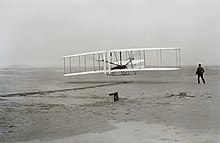
Thursday, August 18
Twilight Concert: phantogram + ghostland observatory
Phantogram: came late but still caught a few songs. Glad I was introduced to these guys
Ghostland Obsersvatory: epileptic seizure inducing lightshow. Really cool performance and fun show. Lots of jumping and pushing around so I almost lost my glasses twice. Had a fog machine running and all the grass is dead so there was a ton of dust that we breathed in. Nose and throat are all irritated
Should have taken a picture but I was afraid of losing my phone in all the chaos.
Wednesday, August 17
Grandma Weeks Birthday
been pretty busy today, I had my math test, plasma donation, work, and Grandma Helens Birthday.
dont have much more to report other than the mundane day to day details
Math Test: took my accuplacer test today and it definitely makes me feel stupid. I dont think it intends to make students feel stupid but that is just a side effect of the fact that they test your knowledge all the way up to college level math, which is math that is way beyond my understanding right now.
If I read my scores correctly I tested into a 990 level class which is ok, not the best of outcomes but the world will go on and things will work out. It looks like all the work I did over the summer saved me some tuition money. I wonder if I could manage to make myself sit in on a class again? save the tuition money for when I have the test scores to take the math class that I really need. But then again it was a pretty big hassle and strain to independently force myself to attend class (but which was surprisingly not beyond my capacity, for what it is worth I think I did ok)
Plasma Donation: was pretty routine and uneventful as always (thank goodness). My protein levels are low so I am going to take a break. In the meantime I plan on getting set up at another donation center where I can get a few more bucks.
Work: been working at the kiosk for about a week or so (at least) and I feel like I am getting into the groove of things and selling some stuff. Time goes be much quicker when I have a book to read and pass the time (just a little bit). It will kind of be a bummer when this gig ends because it is a great student job. It would be great to try and find a job that isnt too demanding when this ends so I can continue to save up some money.
Grandma Helen's Birthday: took the scoot over right after work to grandma and grandpa weeks to wish grandma a happy birthday. It is always nice to go over there and see grandmas face beam with joy when I come over, seeing her face like that makes me feel guilty for not coming over more often. Grandma Helen is always so accepting and has so much faith in me it is always a good to share a little bit of time with her when I can. Her sight has failed her completely and her mind tends to forget things, but that is ok she is still my GRANDmother (as she would say)
Understanding US Politics In Four Easy Bullet Points - Forbes
Understanding US Politics In Four Easy Bullet Points - Forbes: the “best way” to understand U.S. politics in four bullet points:
- Republicans and Democrats both play to the rich 1% and to the following industries: big oil, big pharma, defense contractors, and banking and insurance.
- Republicans either take their talking points from Fox News or say things to get picked up on Fox News, but are really laser focused on bullet no. 1.
- No matter who is elected, it is never as good, or as bad, as voters expect it to be. President Bush never banned abortion and we didn’t get Martial Law. President Obama failed to save the economy and we didn’t go socialist (or soshilist; same thing).
- The vote that matters is the vote that’s local, like a town hall vote for the school budget or a zoning law. As a result, voting for selectmen, city council and maybe the mayor and governor, matters and voting actually changes things. For Congress and the Senate, see bullet points 1 and 2.
Tuesday, August 16
gotta try this out sometime: microbial movie theatre
250 mW green laser through a hanging drop of scummy plant water produces a kind of “laser microscope” that will project shadows of all the little microflora on the wall so you can watch them flitter about with the naked eye.

Monday, August 15
Things you gotta do everyday
1. Brush your teeth: you only have so many and they don't last forever
2. Blog: because there is something interesting everyday no matter how small.
3. Ride your bike: because when you do you feel like a million bucks. It is said that "melancholy is incompatible with cycling"
2. Blog: because there is something interesting everyday no matter how small.
3. Ride your bike: because when you do you feel like a million bucks. It is said that "melancholy is incompatible with cycling"
Warren Buffet on tax rates
Stop Coddling the Super-Rich - NYTimes.com:
"Last year my federal tax bill — the income tax I paid, as well as payroll taxes paid by me and on my behalf — was $6,938,744. That sounds like a lot of money. But what I paid was only 17.4 percent of my taxable income — and that’s actually a lower percentage than was paid by any of the other 20 people in our office. Their tax burdens ranged from 33 percent to 41 percent and averaged 36 percent.
If you make money with money, as some of my super-rich friends do, your percentage may be a bit lower than mine. But if you earn money from a job, your percentage will surely exceed mine — most likely by a lot.
To understand why, you need to examine the sources of government revenue. Last year about 80 percent of these revenues came from personal income taxes and payroll taxes. The mega-rich pay income taxes at a rate of 15 percent on most of their earnings but pay practically nothing in payroll taxes. It’s a different story for the middle class: typically, they fall into the 15 percent and 25 percent income tax brackets, and then are hit with heavy payroll taxes to boot"
RSS feed
been checking out some RSS feeds to subscribe to and have found a few OK ones but I find The Weekly Sift is head and shoulders above other blogs/feeds I have found.
The author takes a brief analysis of the weeks news and writes up 5 stories that encapsulate the main gist of the news stories. I have not found a more direct and brief way to get the weekly news with such a high level of production.
While I do find that there is a bias to the left of the political spectrum it is probably just due to the fact that mainstream news media has strayed so far to the right.
give it an add and see what you think.
Sunday, August 14
Compass Belt
Compass Belt: gotta make one of these! now I just need to learn more about electronics and soldering. I will probably look into doing a simply project first before I tackle this one it looks pretty complicated.

maybe I will try some of these "beginner" projects first?
dummy alarm
dice
simple electronic lock
adjustable timer
mood light
lots more projects here and here
dummy alarm
dice
simple electronic lock
adjustable timer
mood light
lots more projects here and here
Saturday, August 13
the importance of drafting


I have never seen Pi represented this way

I have never seen Pi represented this way and I makes a lot of sense. Reading the wiki on Pi it says that Pi is a mathmatical constant that is equal to the the ratio between the circumference and diameter of a circle.
this is also called Archimedes constant but I don't know why
Friday, August 12
Final excerpt from Contact by Carl Sagan
They had been right to keep the truth from her. She was not sufficiently advanced to receive that signal, much less decrypt it. She had spent her career attempting to make contact with the most remote and alien of strangers, while in her own life she had made contact with hardly anyone at all. She had been fierce in debunking the creation myths of others, and oblivious to the lie at the core of her own. She had studied the universe all her life, but had overlooked its clearest message: For small creatures such as we the vastness is bearable only through love.
***
Finished Contact by Carl Sagan last night and let me say that I was impressed by his writing, I never knew him as much as a writer. I found the book to be revealing of a deep philosophy of life that I didnt know Sagan possessed. I found this video expresses a similar philosophy to what he wrote in contact, here is a glimpse of his thoughts:
Oh how I would love to gain the perspective that Carl Sagan had as an astronomer. to even grasp a fraction of how he understood the vastness of the universe and utterly insignificant scale of our own existence. After reading this book I can see how people say that Astronomy is a science that stretches your perceptions of the world and causes you to reconsider once held beliefs.
Throughout the book he writes (through the experiences of the characters) of how contemplating the vastness of the universe evokes feelings not unlike those of a religious experience or a Numinous experience.
Before I had read Contact I was under the impression that Carl Sagan was an Atheist, now after reading the book I think I would say that Carl Sagan was very much a religious man (officially he said he was an agnostic),just not in the same way we would normally say someone is religious. On religion he said:
The idea that God is an oversized white male with a flowing beard who sits in the sky and tallies the fall of every sparrow is ludicrous. But if by God one means the set of physical laws that govern the universe, then clearly there is such a God. This God is emotionally unsatisfying... it does not make much sense to pray to the law of gravity.What this quote doesn't show is his deep, personal, view of the universe. How the complete insignificance of the Earth in comparison to the unimaginable size of the universe should cause us to reconsider deeply held beliefs of how we treat and view each other. To take a step back and ask the question "does this really matter? is this something that the only known intelligent beings in the universe should be doing? Dont we deserve to be treated better and likewise treat others better?", were the questions that in my mind really mattered to Carl Sagan.
I think that the significance of a book is only truly apparent to a reader after a period of time has passed. Enough time to let the most important parts stew in your mind till you finally understand and know what the author was trying to say, and connect it with your previous thoughts and feelings. Only after a period of time has passed I think will you know how the book influenced you. Maybe a follow-up post will be in order
Central planned economy and the US
Posting this here so I can discuss this with someone who knows about Economics so they can explain it to me better.

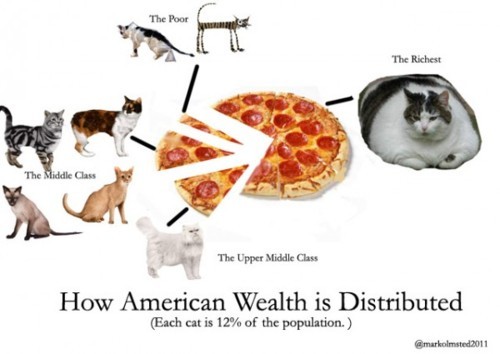
an extreme concentration of wealth at the center of our market economy has led to a form of central planning. The concentration of wealth is now in so few hands and is so extreme in degree, that the combined liquid financial power of all of those not in this small group is inconsequential to determining the direction of the economy. As a result, we now have the equivalent of centralized planning in global marketplaces. A few thousand extremely wealthy people making decisions on the allocation of our collective wealth. The result is inevitable: gross misallocation across all facets of the private economy.
The rich are different — and not in a good way, studies suggest
the philosophical battle over economics, taxes, debt ceilings and defaults that are now roiling the stock market is partly rooted in an upper class "ideology of self-interest."article makes a lot of bold claims that make me wonder how much of it is actually true. for instance nothing is said of what constitutes "rich" which could definitely skew results. Too bad they don't link to any of the sources
In other words, rich people are more likely to think about themselves. “They think that economic success and political outcomes, and personal outcomes, have to do with individual behavior, a good work ethic,” said Keltner, a professor of psychology at the University of California, Berkeley.
Because the rich gloss over the ways family connections, money and education helped, they come to denigrate the role of government and vigorously oppose taxes to fund it.Then there is the problem of Tea Partiers’ own class position. While they are funded by the wealthy, many do not identify themselves as wealthy (though there is dispute on the real demographics). Still, a strong allegiance to the American Dream can lead even regular folks to overestimate their own self-reliance in the same way as rich people.
most people could quickly tell you how much they paid in taxes last year but few could put a dollar amount on how they benefited from government by, say, driving on interstate highways, taking drugs gleaned from federally funded medical research, or using inventions created by people educated in public schools.
There is one interesting piece of evidence showing that many rich people may not be selfish as much as willfully clueless, and therefore unable to make the cognitive link between need and resources. Last year, research at Duke and Harvard universities showed that regardless of political affiliation or income, Americans tended to think wealth distribution ought to be more equal.
The problem? Rich people wrongly believed it already was.
Thursday, August 11
Excerpt from Contact by Carl Sagan
"I want to know what you think of us," she said shortly, "what you really think."
He did not hesitate for a moment. "All right. I think it's amazing that you've done as well as you have.You've got hardly any theory of social organization, astonishingly backward economic systems, no grasp of the machinery of historical prediction, and very little knowledge about yourselves. Considering how fast your world is changing, it's amazing you haven't blown yourselves to bits by now. That's why we don't want to write you off just yet. You humans have a certain talent for adaptability--at least in the short term."
"That's the issue, isn't it?"
"That's one issue. You can see that, after a while, the civilizations with only short-tem perspectives just aren't around. They work out their destinies also."
Wednesday, August 10
Confucian Virtue
The ancients who wished to illustrate illustrious virtue throughout the kingdom, first ordered well their own States. Wishing to order well their States, they first regulated their families. Wishing to regulate their families, they first cultivated their persons. Wishing to cultivate their persons, they first rectified their hearts. Wishing to rectify their hearts, they first sought to be sincere in their thoughts. Wishing to be sincere in their thoughts, they first extended to the utmost their knowledge. Such extension of knowledge lay in the investigation of things.
Things being investigated, knowledge became complete. Their knowledge being complete, their thoughts were sincere. Their thoughts being sincere, their hearts were then rectified. Their hearts being rectified, their persons were cultivated. Their persons being cultivated, their families were regulated. Their families being regulated, their States were rightly governed. Their States being rightly governed, the whole kingdom was made tranquil and happy.
- Passage from The Great Learning, Confucius
Tuesday, August 9
Dear London rioters
Dear London rioters,
You have opened the eyes of the world to so much,you have shown how powerful a grassroots movement can be, you have shown just how easy it is to unleash chaos, you have shown just how powerless governments can be in the face of a movement like yours. And what do you do with this new found power? Do you work to actually make a positive change, to try and build a future that you yourself would want to live in after politicians have taken away so much.
No, you havent . Instead you have shown the world what you are really about: looting a pair of sneakers and torching whatever strikes your fancy. You are not about promoting any sort of principle or social good. You could have enacted so much change if only you saw the empowering effects of principle, intead you got hell-bent on some power trip. You are scum. You make me sick
Twitter #londonriots
Twitter / Search - #londonriots: "The Youth of the Middle East rise up for basic freedoms.The Youth of London rise up for a HD ready 42' Plasma TV #londonriots"
Monday, August 8
Constitutional Convention
would love to hear if anything comes of this. Seems like as good a time as any with today's ideologues and political gridlock
The Framers created a method for escaping from captured government—an Article V Constitutional Convention. If two-thirds of the states pass resolutions calling for a convention, then all sides will have the opportunity to argue for the changes they believe will restore our Republic. Any amendment proposed must then be ratified by three fourths of the states to become law.
On September 24th, people from across America and across the political spectrum will convene at Harvard University to discuss the advisability and feasibility of organizing towards a Constitutional Convention. The conference's lead organizers are both proponents and opponents of an Article V convention and we actively encourage the participation of those who support a convention and those who oppose holding a convention at all.
even though it does have a Tea Party "representative" as a co-chair representative for the conference I would like to see what ideas they come up with
On Reading
Rarely have young people been expected to have truly deep knowledge of particular texts. Instead, education, especially in its "liberal arts" embodiments, has been devoted to providing students with navigational tools—with enough knowledge to find their way through situations that they might confront later in life. (Even the old English public schools flogged their students through years of Latin and Greek not because Latin and Greek were intrinsically valuable, still less useful, but because the discipline of such study would have a salutary effect on young men's characters. And these are the terms in which survivors of that system typically praise it.) This is one of the ways in which the artes liberales are supposed to be "liberal," that is, "liberating": They free you to make your own way through the challenges of life without requiring external props.this is the sort of education we need to be getting in our schools. these days there are so many different avenues for getting information it is easy to be overcome with information overload. As noted in the article information overload has been heralded as a problem since books were first printed on the Gutenberg press, and since then many techniques have been developed to try and overcome this problem. Techniques such as speed reading or skimming are advocated, and while these techniques work for some and are effective in trying to filter out the good from the bad they simply don't address another symptom of information overload: that is the fact that there is so much information that even if you are able to snag a piece of literature we don't have the mental determination to deep, focused attention needed for serious analysis and learning.
A Liberal Education is the sort of education I want, an education that doesn't just fill me up with knowledge and trivia but that build character and the attributes necessary to lean on my own, yet as the article discusses it is something that is difficult to teach. Rarely do people have the passion, focus, self determination or whatever you want to call it these days to not only search out a book but become engaged and actively thinking, interacting with what an author of a literary work is trying to express. I myself find that I am far to passive and merely sit back and absorb what I can from a book.
Those who proclaimed that 'knowledge is power' meant that the only true education is self-education
The Peak Oil Crisis: Parsing the GDP
The Peak Oil Crisis: Parsing the GDP: "The important point is that between the $1.44 a gallon gasoline of 2002 and the $4.20 a gallon gasoline of July 2008, the cost of filling our collective fuel tanks, rose by some $2.2 billion a day. With half of this money leaving the country to pay for oil imports, it is not difficult to figure out why the economy has not been doing too well of late. Conversely, when gasoline fell from $4.20 a gallon in July to $1.84 in December of 2008, $1.8 billion a day reappeared in our collective pockets and the economy started to revive."
Crunch time
Last week of my math class, don't have much more time till I have to take the accuplacer test to see what math class I get into. I really hope I am able to test into a level 1000 or higher class but I am not optimistic that that will happen. Reguardless of what happens I am glad to be learning and gaining math skills, which in turn makes me more comfortable with the thought of taking a physics course in the near future. The only downside that I can see at the moment would be to prolong my education
Sunday, August 7
New blog tags
Sometimes I dont like to admit it but I actually consume a lot of internet. But in all my time online I am always impressed at the way the internet is able to show me new and interesting material from such diverse and unrelated backgrounds which makes me see the internet as yes a place for trivial and mindless dribble but at the same time a place for people to connect with some of the most interesting ideas from anywhere in the world. In coming across material for the blog I am reminded of Gandhi's Seven Deadly Sins which read:
looking at these precepts I think I could find examples of each of the sins and share them here. While Gandhi recognized these as sins I wonder if it would be possible to find the Seven Moral Virtues
In this video it shows how some musicians have made music out of the radioactive decay of elements. The musicians have managed to blend music with science and I think the result is something you will enjoy!
Update 8/15/11: after some further thought I think I will have to put this tag on the back-burner for the moment due to the fact that I haven't really used it. I originally envisioned this to be a reoccurring tag I could put on subsequent posts but that hasn't turned out to be the case after having it for a few weeks. I can see why Gandhi saw these and sins and while I notice many of these things as sins I didn't intend for this tag to be used to highlight the sins of the world here. I wanted to be able to show the seven moral virtues and I still have hope that they exist in the world I think that they are hard to come by.
Wealth without WorkI really like how these show that for everything we strive for we must always never forget to lose sight of the core principles for which we do things. That all things are in opposition to each other and although it seems counter-intuitive, we must seek balance between the things we do and desire.
Pleasure without Conscience
Science without Humanity
Knowledge without Character
Politics without Principle
Commerce without Morality
Worship without Sacrifice
looking at these precepts I think I could find examples of each of the sins and share them here. While Gandhi recognized these as sins I wonder if it would be possible to find the Seven Moral Virtues
Wealth with WorkSo to kick things off I will share a video that shows Science with Humanity
Pleasure with Conscience
Science with Humanity
Knowledge with Character
Politics with Principle
Commerce with Morality
Worship with Sacrifice
In this video it shows how some musicians have made music out of the radioactive decay of elements. The musicians have managed to blend music with science and I think the result is something you will enjoy!
Update 8/15/11: after some further thought I think I will have to put this tag on the back-burner for the moment due to the fact that I haven't really used it. I originally envisioned this to be a reoccurring tag I could put on subsequent posts but that hasn't turned out to be the case after having it for a few weeks. I can see why Gandhi saw these and sins and while I notice many of these things as sins I didn't intend for this tag to be used to highlight the sins of the world here. I wanted to be able to show the seven moral virtues and I still have hope that they exist in the world I think that they are hard to come by.
What Happened to Obama’s Passion? - NYTimes.com
Stories I believe are integral parts of how we interact and view the world. For thousands of years before the written word, stories were the sole means of transmitting and preserving valuable information. I would not be surprised if it is found that there exists some hardwired tendency for humanity to naturally gravitate towards storytelling as the de facto form of information dissemination. The stories we tell ourselves guide our preconceptions and shape our values which is why as it is so important as discussed in the article why politicians need to craft a story (whether the story is based on factual evidence is another case, just look to the republican story of "small government" in all things except in social policy such as gay rights and abortion along with "national defense") is necessary for people to believe and support you. Obama is credited with running a highly successful election campaign but has not seen the same success in his presidency. Ask anyone what Obama's campaign slogan was and all will easily respond "hope", but this slogan was built upon Obama's up and coming rags to riches story he crafted and people bought it. But what is the narrative pushed by Obama post election? Has his "centrist" policies and endless compromise muddled the story Obama was elected on and left voters confused?
What Happened to Obama’s Passion? - NYTimes.com: "The stories our leaders tell us matter, probably almost as much as the stories our parents tell us as children, because they orient us to what is, what could be, and what should be; to the worldviews they hold and to the values they hold sacred. Our brains evolved to “expect” stories with a particular structure, with protagonists and villains, a hill to be climbed or a battle to be fought. Our species existed for more than 100,000 years before the earliest signs of literacy, and another 5,000 years would pass before the majority of humans would know how to read and write.
Stories were the primary way our ancestors transmitted knowledge and values. Today we seek movies, novels and “news stories” that put the events of the day in a form that our brains evolved to find compelling and memorable. Children crave bedtime stories; the holy books of the three great monotheistic religions are written in parables; and as research in cognitive science has shown, lawyers whose closing arguments tell a story win jury trials against their legal adversaries who just lay out “the facts of the case.”"
The Dutch Way - Bicycles and Fresh Bread - NYTimes.com
good commentary on not only the structural but cultural differences on American style transportation and Dutch transportation. Both structural and cultural barriers will need to be overcome if we are to achieve a balanced transportation infrastructure.
The Dutch Way - Bicycles and Fresh Bread - NYTimes.com: "Dutch drivers are taught that when you are about to get out of the car, you reach for the door handle with your right hand — bringing your arm across your body to the door. This forces a driver to swivel shoulders and head, so that before opening the door you can see if there is a bike coming from behind. Likewise, every Dutch child has to pass a bicycle safety exam at school. The coexistence of different modes of travel is hard-wired into the culture.
This in turn relates to lots of other things — such as bread. How? Cyclists can’t carry six bags of groceries; bulk buying is almost nonexistent. Instead of shopping for a week, people stop at the market daily. So the need for processed loaves that will last for days is gone. A result: good bread."
Saturday, August 6
Put it on Washington's tab
we often look back on the founding fathers with rose colored glasses. It is easy to look at some of the many portraits and paintings of our fledgling nation and not get caught up in the ideals of freedom.
Yet do our idealistic depictions of our founding fathers match up with what the historical records say?
Surprisingly no, take for instance General George Washington lauded as possibly our most respected and principled leader in the early days of our nation. We are familiar with his stately, soft spoken mannerisms yet historical records show that his seemingly benevolent nature came at a cost.
It was June 16, 1775, and American statesman George Washington was feeling magnanimous. Or, at least, that's what he wanted everyone to think. Washington had just been appointed general of the Continental Army over the soaring hopes of John Hancock,[1] and, in order to not look too pleased with himself, America's future first president declined fiscal remuneration for his services. Well, almost. He said:Sir, I beg leave to assure the Congress that as no pecuniary consideration could have tempted me to have accepted this arduous employment, I do not wish to make any profit from it. I will keep an exact account of my expenses. Those I doubt not they will discharge, and that is all I desire."Expenses", eh? Latter-day patriots, infused with nationalistic fervor, might assume this meant Washington would only take the barest hint of sustenance for his labors. As Commander-in-Chief of the Continental Army, Washington might expect a comfortable salary. For a little perspective, the very day Washington accepted his commission, Congress drew up the pay for officers and privates. A private made $6 2/3 a month, a captain $20, and a major general $166. Seems to us Washington was giving up a decent sum in exchange for this promise of discharging these expenses.
So, in the end, how much did Washington spend over his eight years of service?
$449,261.51, in 1780 dollars.
Taking into account 220 years of inflation that'd be worth over $4,250,000.00 today.[5]Four million dollars' worth of "expenses", and, after going over the account with a fine-toothed comb (at one point he was corrected for undercounting 89/90 of a dollar), Congress approved the lot of it.
How the US media marginalises dissent - Opinion - Al Jazeera English
How the US media marginalises dissent - Opinion - Al Jazeera English
Good discussion on just how much the media shapes and forms our public discourse.
On discovering you're and Android
A very discomfiting realisation, discovering you are an android. That all those thoughts and ideas and feelings you seem to be having are just electrical impulses zapping through your circuits.
The idea that the self, or the conscious mind, emerges from the workings of the physical structures of the brain – with no need to invoke any supernatural spirit, essence or soul – is so fundamental to modern neuroscience that it almost goes unmentioned. It is the tacitly assumed starting point for discussions between neuroscientists, justified by the fact that all the data in neuroscience are consistent with it being true. Yet it is not an idea that the vast majority of the population is at all comfortable with or remotely convinced by. Its implications are profound and deeply unsettling, prompting us to question every aspect of our most deeply held beliefs and intuitions.
This idea has crept along with little fanfare – it did not emerge all at once like the theory of evolution by natural selection. There was no sudden revolution, no body of evidence proffered in a single moment that overturned the prevailing dogma. While the Creator was toppled with a single, momentous push, the Soul has been slowly chipped away at over a hundred years or more, with most people blissfully unaware of the ongoing assault. But its demolition has been no less complete.
If you are among those who is skeptical of this claim or who feels, as many do, that there must be something more than just the workings of the brain to explain the complexities of the human mind and the qualities of subjective experience (especially your own), then first ask yourself: what kind of evidence would it take to convince you that the function of the brain is sufficient to explain the emergence of the mind?
Imagine you came across a robot that performed all the functions a human can perform – that reported a subjective experience apparently as rich as yours. If you were able to observe that the activity of certain circuits was associated with the robot’s report of subjective experience, if you could drive that experience by activating particular circuits, if you could alter it by modifying the structure or function of different circuits, would there be any doubt that the experience arose from the activity of the circuits? Would there be anything left to explain?
"The most merciful thing in the world, I think, is the inability of the human mind to correlate all its contents. We live on a placid island of ignorance in the midst of black seas of infinity, and it was not meant that we should voyage far. The sciences, each straining in its own direction, have hitherto harmed us little; but some day the piecing together of dissociated knowledge will open up such terrifying vistas of reality, and of our frightful position therein, that we shall either go mad from the revelation or flee from the deadly light into the peace and safety of a new dark age."
H.P. Lovecraft
Friday, August 5
That anxiety may be in your gut, not in your head
bacteria in our guts play many important roles in our health and well being, but new research has found that bacteria residing in the gut influence brain chemistry and behaviour. For each person, the gut is home to about 1,000 trillion bacteria with which we live in harmony. These bacteria perform a number of functions vital to health: They harvest energy from the diet, protect against infections and provide nutrition to cells in the gut. Any disruption can result in life-threatening conditions, such as antibiotic-induced colitis from infection with the "superbug" Clostridium difficile.
Working with healthy adult mice, the researchers showed that disrupting the normal bacterial content of the gut with antibiotics produced changes in behaviour; the mice became less cautious or anxious. This change was accompanied by an increase in brain derived neurotrophic factor (BDNF), which has been linked, to depression and anxiety.
When oral antibiotics were discontinued, bacteria in the gut returned to normal.
"This was accompanied by restoration of normal behaviour and brain chemistry," Collins said.
To confirm that bacteria can influence behaviour, the researchers colonized germ-free mice with bacteria taken from mice with a different behavioural pattern. They found that when germ-free mice with a genetic background associated with passive behaviour were colonized with bacteria from mice with higher exploratory behaviour, they became more active and daring. Similarly, normally active mice became more passive after receiving bacteria from mice whose genetic background is associated with passive behaviour.
Life Before the Dinosaurs
what does a seven year old who is enamored with prehistoric life do? Well he blogs about it of course
Thursday, August 4
Famine, politics and governance
"Famines don’t happen in democracies because political leaders have an incentive to ensure that their citizens don’t go hungry; they need their votes. That’s the argument put forward by Nobel Prize-winning economist Amartya Sen in his 1981 book on “Poverty and famines.” The current crisis in the Horn of Africa seems to lend weight to Sen’s argument –- and to the argument that famine is a crime -– demonstrating that droughts only turn into famines when they take place against a background of bad politics and governance."
Educating the Saints Hugh W. Nibley
In "Higher Education" the traffic titles and forms are already long established: The office with its hoarded files of scoresheets, punched cards, and tapes can declare exactly how educated any individual is—even to the third decimal. That is the highly structured busywork which we call education today; but it was not Brigham Young's idea of education. He had thoughts which we have repeated from time to time with very mixed reception on the BYU campus. Still we do not feel in the least inclined to apologize for propagating them on the premises of a university whose main distinction is that it bears his name.
Brigham Young's declaration that "every art and science known and studied by the children of men is comprised within the Gospel."82 But this does not mean, as is commonly assumed, that anything one chooses to teach is the gospel—that would be as silly as arguing that since all things are made of electrons, protons, neutrons, etc., whenever anyone opens his mouth to speak he gives a lecture on physics. It means rather that all things may be studied and taught in the light of the gospel: "If an Elder shall give us a lecture upon astronomy, chemistry, or geology, our religion embraces it all. It matters not what the subject be, if it tends to improve the mind, exalt the feelings, and enlarge the capacity."83 It would be quite impossible to improve the mind, exalt the feelings and enlarge the capacity of any man without making him a better candidate for heaven—"it matters not what the subject be."84 By the same token, the reading of the scriptures if not undertaken in that spirit does not belong to our religion: " 'Shall I sit down and read the Bible, the Book of Mormon, and the Book of Covenants all the time?' says one. Yes, if you please, and when you have done, you may be nothing but a sectarian after all. It is your duty to study . . . everything upon the face of the earth, in addition to reading those books."85
It is perfectly natural for the young who discover the world of scholarship for the first time to strike in their sophomoric zeal an intellectual pose, rail in high terms against the Church that has kept them in darkness all these years, and catalogue the defects and miscalculations of the prophets in the light of their own scholarly elevation. That is perfectly natural, and if we had heeded Brigham Young, the urge to study and criticize would be running in fruitful channels. Whether we like it or not, we are going to have to return to Brigham Young's ideals of education; we may fight it all the way, but in the end God will keep us after school until we learn our lesson: "Behold, you have not understood; you have supposed that I would give it unto you, when you took no thought save it was to ask me. But, behold, I say unto you, that you must study it out in your mind; then you must ask me if it be right" (D&C 9:7–8).
Wednesday, August 3
Excerpt from Contact by Carl Sagan
At a few hundred kilometers altitude, the Earth fills half your sky, and the band of blue that stretches from Mindanao to Bombay, which your eye encompasses in a single glance, can break your heart with its beauty. Home, you think. Home. This is my world. This is where I come from. Everyone I know, everyone I ever heard of, grew up down there, under that relentless and exquisite blue. You race eastward from horizon to horizon, from dawn to dawn, circling the planet in an hour and a half. After a while, you get to know it, you study its idiosyncrasies and anomalies. You can see so much with the naked eye. Florida will soon be in view again. Has that tropical storm system you saw last orbit, swirling and racing over the Caribbean, reached Fort Lauderdale? Are any of the mountains in the Hindu Kush snow-free this summer? You tend to admire the aquamarine reefs in the Coral Sea.
You look at the West Antarctic Ice Pack and wonder whether its collapse could really inundate all the coastal cities on the planet. In the daylight, though, it's hard to see any sign of human habitation. But at night, except for the polar aurora, everything you see is due to humans, humming and blinking all over the planet. That swath of light is eastern North America, continuous from Boston to Washington, a megalopolis in fact if not in name. Over there is the burn off of natural gas in Libya. The dazzling lights of the Japanese shrimp fishing fleet have moved toward the South China Sea. On every orbit, the Earth tells you new stories. You can see a volcanic eruption in Kamchatka, a Saharan sandstorm approaching Brazil, unseasonably frigid weather in New Zealand. You get to thinking of the Earth as an organism, a living thing. You get to worry about it, care for it, wish it well. National boundaries are as invisible as meridians of longitude, or the Tropics of Cancer and Capricorn. The boundaries are arbitrary.
The planet is real. Spaceflight, therefore, is subversive. If they are fortunate enough to find themselves in Earth orbit, most people, after a little meditation, have similar thoughts. The nations that had instituted spaceflight had done so largely for nationalistic reasons; it was a small irony that almost everyone who entered space received a startling glimpse of a transnational perspective, of the Earth as one world. It wasn't hard to imagine a time when the predominant loyalty would be to this blue world, or even to the cluster of worlds huddling around the nearby yellow dwarf star on which humans, once unaware that every star is a sun, had bestowed the definite article: the Sun. It was only now, when many people were entering space for long periods and had been afforded a little time for reflection, that the power of the planetary perspective began to be felt.
Tuesday, August 2
Things I need to do better on
going to class: have had a hard time going to my math class lately and am concerned I wont be able to test into a high enough math level that I would like. I don't know why it is difficult for me to get there as I almost never regret going once I am there.
complimenting people: I think this would be a good thing for me to work on as it is something that everybody likes and helps you to get to know more people (if you do it in a non-creepy way).
serving others: this is something that would help me feel good and other people feel good. I mean if you think about it that way why doesn't everybody do service? This comes to my mind because as I was donating plasma the other day and I overheard one of the techs say how he did not want to live to old age. He reasoned that old age is just too much to bear because all you deal with is your body falling apart. But it made me wonder, to reach old age is something that not everybody get the chance to do so and if you do you do it while consuming and relying upon others, so wouldn't you feel an obligation to maybe try and give back to others after you had received so much?
Nasa Spin-off Tech
NASA tech
with the talk of the last shuttle flight and the increasing worries of the national debt people often wonder if NASA is worth American tax payer dollars when currently it only consumes .05-1% of the federal budget.
Here are several "practical" applications that have arisen due to NASA. But really if you are trying to decide if NASA is worth American tax dollars just have a drink of Tang, I mean come on the stuff is delicious!
EDIT: tang was actually not invented by NASA and was only used after the astronauts found the water on the spacecrafts distasteful and used tang to make it more palatable
EDIT: tang was actually not invented by NASA and was only used after the astronauts found the water on the spacecrafts distasteful and used tang to make it more palatable
Vilnius Mayor A.Zuokas Fights Illegally Parked Cars with Tank
seems a little harsh to actually run over a car just because it is illegally parked. maybe a parking ticket would have sufficed? there has to be more to the story than what is shown here.
Monday, August 1
Saint Augustine on Happiness
Life is hard, really hard and can really blow sometimes. With this in mind how are we to find happiness? is it in following our reason as the stoic philosophers say? Are we to find peace and solace in the belief that pain is temporary? Is self control and logic the only way to happiness.
Saint Augustine counters the stoic philosophers and writes that realizing and understanding the transient nature of suffering does not reduce the pain felt or the sorrows we feel and writes:
Saint Augustine counters the stoic philosophers and writes that realizing and understanding the transient nature of suffering does not reduce the pain felt or the sorrows we feel and writes:
"Its brevity (speaking of pain), therefore, does not clear it of misery, neither ought it to be called happiness because it is a brief misery."so if according to Saint Augustine, if happiness is not found in brief moments of solace that punctuate our lives, where is it? Saint Augustine writes further that
"For we are saved by hope: now hope which is seen is not hope; for what a man seeth, why doth he yet hope for? But if we hope for that we see not, then do we with patience wait for it." As, therefore, we are saved, so we are made happy by hope. And as we do not as yet possess a present, but look for a future salvation, so is it with our happiness.have you ever seen a man happy who did not have hope? I dare say no. Hope, as Saint Augustine writes is part of happiness and it must be secured and kept if we are to find happiness in this world.
Mind Games « Cycling Unbound
Mind Games « Cycling Unbound: "With the wish to safeguard my happiness,
I need to work hard and safeguard my mind;
If I’m unable to safeguard my mind,
I’ll also be unable to safeguard my happiness"
I need to work hard and safeguard my mind;
If I’m unable to safeguard my mind,
I’ll also be unable to safeguard my happiness"